
When we think of jellyfish stings, we usually think of how they affect humans. But have you ever wondered if jellyfish can sting themselves? After all, they do have stinging cells called nematocysts on their tentacles and body.
What Are Nematocysts?

Nematocysts are specialized cells found in the tentacles and body of jellyfish. These cells contain tiny harpoons that are loaded with venom. When a jellyfish comes into contact with prey or a potential threat, the nematocysts fire their harpoons and inject the venom.
Can Jellyfish Sting Themselves?
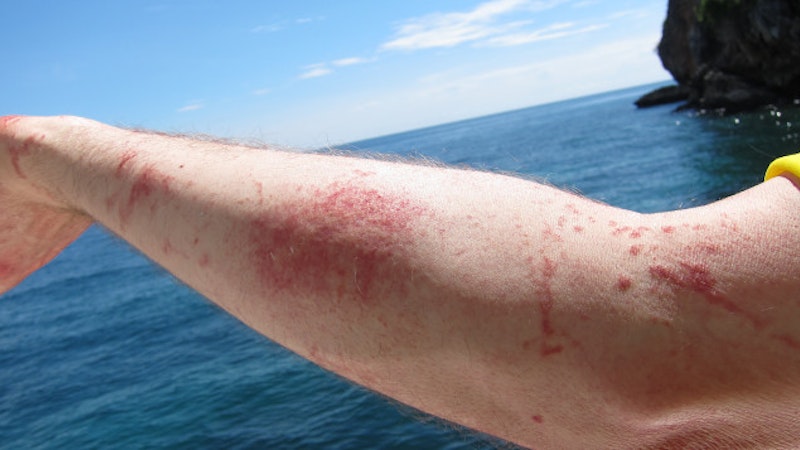
While jellyfish do have nematocysts on their tentacles and body, they are not affected by their own venom. The reason for this is that the nematocysts on a jellyfish's body are not triggered by its own touch or movement.
However, there is one exception to this rule. Some species of jellyfish, such as the box jellyfish, have nematocysts on their tentacles that are triggered by their own movement. This means that they can potentially sting themselves if their tentacles come into contact with their body.
Why Don't Jellyfish Sting Themselves?
While jellyfish can potentially sting themselves in certain circumstances, they have several mechanisms in place to prevent this from happening. One of these mechanisms is the placement of their nematocysts. The nematocysts on a jellyfish's body are mostly located on the oral arms, which are the long, thin tentacles that surround the mouth. This means that they are less likely to come into contact with the rest of the jellyfish's body.
Jellyfish also have a layer of mucus on their body that helps to prevent the nematocysts from firing. This mucus acts as a barrier between the nematocysts and the jellyfish's skin, preventing them from triggering when the jellyfish comes into contact with itself.
What Happens When a Jellyfish Stings Itself?

If a jellyfish were to accidentally sting itself, the effects would vary depending on the species and the location of the sting. Some species of jellyfish have a relatively mild sting that would not cause much harm to the jellyfish itself. Other species, such as the box jellyfish, have a highly potent venom that can cause serious harm or even death.
However, it is important to note that jellyfish do not intentionally sting themselves. They are highly skilled at avoiding their own stingers and have several mechanisms in place to prevent accidental stings from occurring.
Conclusion
In conclusion, while jellyfish do have nematocysts on their tentacles and body, they are not affected by their own venom. This is because the nematocysts on a jellyfish's body are not triggered by its own touch or movement. However, some species of jellyfish can potentially sting themselves if their tentacles come into contact with their body. Jellyfish have several mechanisms in place to prevent accidental stings from occurring, including the placement of their nematocysts and a layer of mucus on their body.