
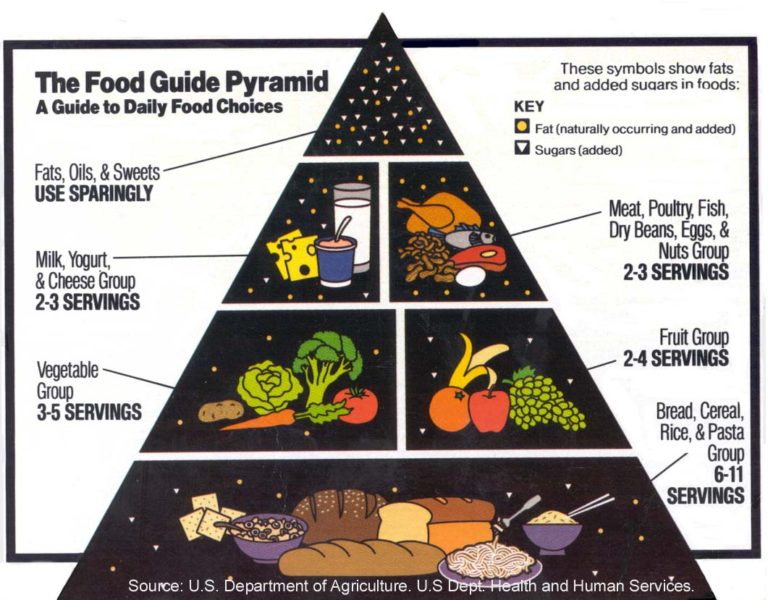
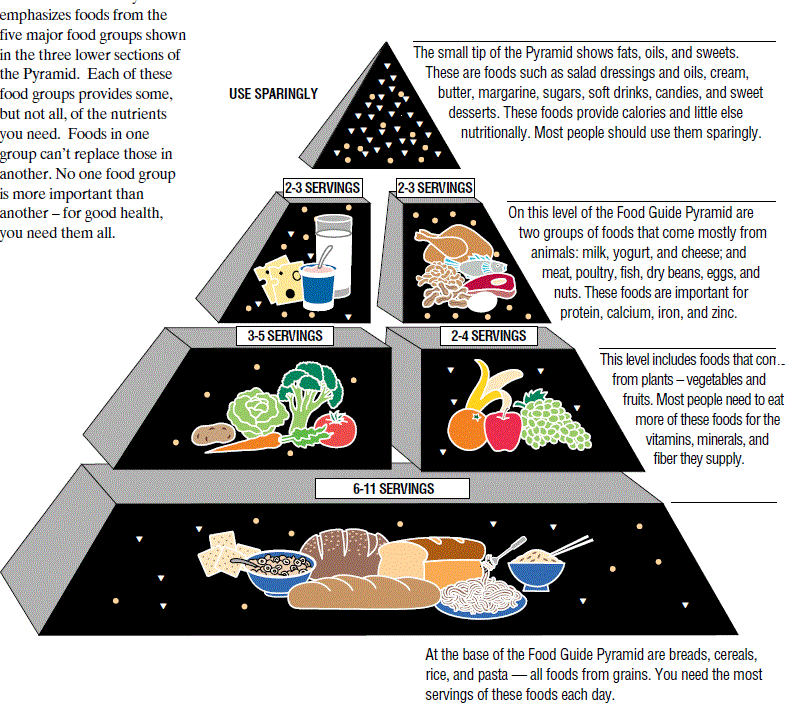
The USDA food pyramid is a visual representation of the recommended daily intake of different food groups for a healthy diet. The pyramid was first introduced in 1992 and has since been revised multiple times to reflect changing dietary recommendations and scientific research.
The Five Food Groups

The current USDA food pyramid is based on five food groups:
- Vegetables
- Fruits
- Grains
- Protein foods
- Dairy
Each food group provides different nutrients that are essential for a healthy diet. It is recommended to consume a variety of foods from each group to ensure adequate nutrient intake.
Vegetables

Vegetables are an important source of vitamins, minerals, and fiber. The USDA recommends that adults consume 2-3 cups of vegetables per day, depending on their age, gender, and level of physical activity.
Examples of vegetables include:
- Leafy greens (spinach, kale, lettuce)
- Cruciferous vegetables (broccoli, cauliflower, Brussels sprouts)
- Root vegetables (carrots, sweet potatoes, beets)
- Legumes (beans, peas, lentils)
Fruits

Fruits are another important source of vitamins, minerals, and fiber. The USDA recommends that adults consume 1.5-2 cups of fruit per day, depending on their age, gender, and level of physical activity.
Examples of fruits include:
- Berries (strawberries, blueberries, raspberries)
- Citrus fruits (oranges, grapefruits, lemons)
- Stone fruits (peaches, plums, cherries)
- Tropical fruits (bananas, mangoes, pineapples)
Grains
Grains are a good source of carbohydrates, which provide energy for the body. The USDA recommends that adults consume 6-8 ounces of grains per day, with at least half of those being whole grains.
Examples of grains include:
- Whole wheat bread
- Brown rice
- Quinoa
- Oatmeal
Protein Foods
Protein is essential for building and repairing tissues in the body. The USDA recommends that adults consume 5.5-6.5 ounces of protein foods per day, depending on their age, gender, and level of physical activity.
Examples of protein foods include:
- Meat (beef, pork, chicken)
- Fish (salmon, tuna, shrimp)
- Eggs
- Nuts and seeds
Dairy

Dairy products are a good source of calcium, which is important for building and maintaining strong bones. The USDA recommends that adults consume 3 cups of dairy per day, depending on their age, gender, and level of physical activity.
Examples of dairy products include:
- Milk
- Cheese
- Yogurt
MyPlate

In 2011, the USDA replaced the food pyramid with a new visual representation called MyPlate. MyPlate is a plate divided into four sections: fruits, vegetables, grains, and protein, with a side of dairy.
MyPlate is meant to be a simpler and more straightforward approach to healthy eating, making it easier for people to understand and follow the dietary recommendations.
Conclusion
The current USDA food pyramid is based on five food groups: vegetables, fruits, grains, protein foods, and dairy. It is recommended to consume a variety of foods from each group to ensure adequate nutrient intake. The MyPlate visual representation provides a simpler and more straightforward approach to healthy eating.