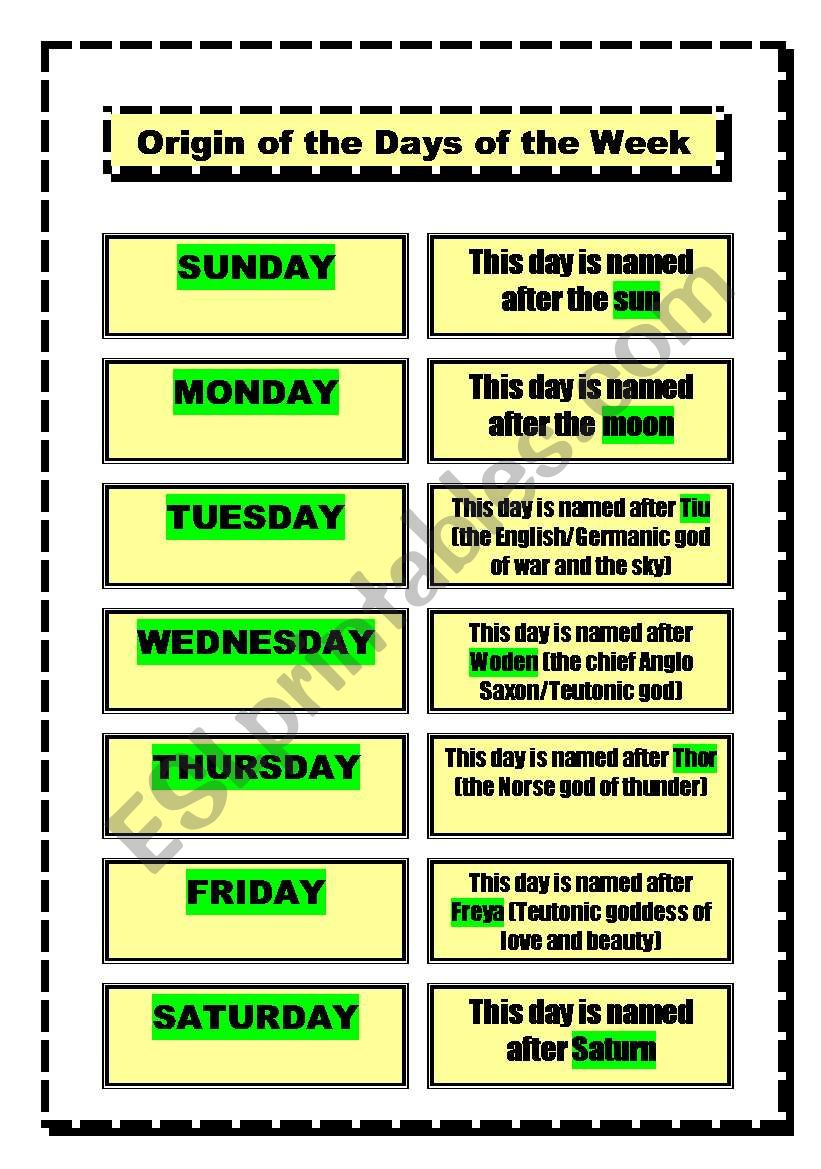
Have you ever wondered where the names of the days of the week come from? In English, they are named after a combination of Norse and Roman gods and planets. Let's take a closer look at the origin of each day's name.
Monday

Monday is named after the Moon, which in Old English was called Monandæg. The Moon was associated with the goddess of the same name in Norse mythology, and also with the Roman goddess Luna.
Tuesday

Tuesday is named after the Norse god of war, Tyr. The Old English name for Tuesday was Tiwesdæg, which means "Tiw's day". Tiw was the equivalent of Tyr in Anglo-Saxon mythology.
Wednesday

Wednesday is named after the Norse god Odin, or Woden in Old English. The Old English name for Wednesday was Wodnesdæg.
Thursday

Thursday is named after the Norse god of thunder, Thor. The Old English name for Thursday was Þunresdæg, which means "Thor's day".
Friday

Friday is named after the Norse goddess of love, fertility, and war, Freya. The Old English name for Friday was Frigedæg, which means "Freya's day".
Saturday

Saturday is named after the Roman god Saturn, who was associated with agriculture and wealth. The Old English name for Saturday was Sæturnesdæg.
Sunday

Sunday is named after the Sun, which in Old English was called Sunnandæg. The Sun was associated with the Roman god Sol, and also with the Norse goddess Sunna.
Now that you know the origin of the names of the days of the week, you can impress your friends with your knowledge. It's interesting to see how different cultures and mythologies influenced the English language.