Salt is a crucial element in cooking and has been used for thousands of years to enhance the flavor of food. However, not all salt is created equal. Two common types of salt used in cooking are kosher salt and table salt. Although they may look similar, they have different properties and uses. In this article, we will discuss the differences between kosher salt and table salt.
What is Kosher Salt?

Kosher salt gets its name from its use in the koshering process, where it was used to remove blood from meat. It is a coarse-grained salt that is usually made by compacting salt crystals together. Kosher salt is less dense than table salt, which means it has a larger surface area and dissolves more quickly. This makes it ideal for seasoning meat, as it can penetrate the meat more easily.
What is Table Salt?

Table salt, also known as iodized salt, is a fine-grained salt that is more heavily processed than kosher salt. It is made by extracting salt from underground mines and then refining it to remove impurities. Table salt is then fortified with iodine, an essential mineral that helps prevent thyroid problems.
Texture and Flavor
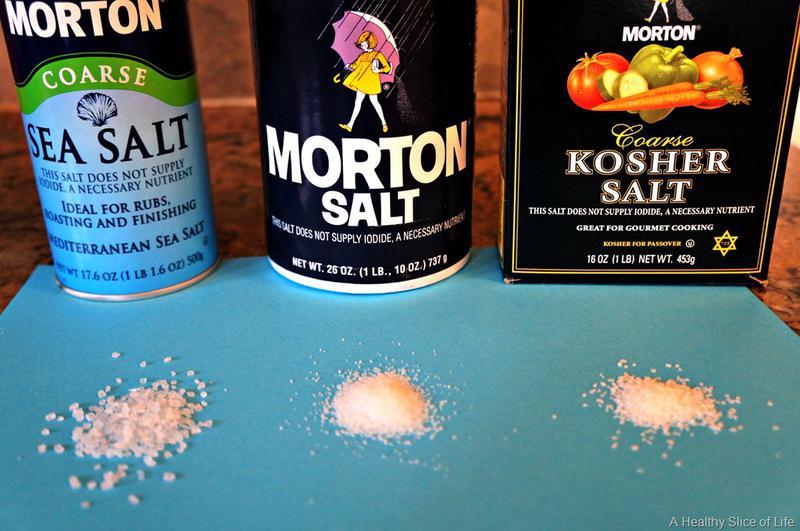
The texture and flavor of kosher salt and table salt are different. Because kosher salt has larger grains, it has a coarser texture and a more delicate flavor. Table salt, on the other hand, has a finer texture and a stronger, saltier flavor. This is because table salt has been processed to remove impurities, which also removes some of the minerals that give salt its characteristic taste.
Uses in Cooking

Both kosher salt and table salt are used in cooking, but they are used in different ways. Kosher salt is ideal for seasoning meat and vegetables because its larger grains make it easier to control the amount of salt added. Table salt, on the other hand, is better for baking, as its fine texture ensures that it dissolves easily and distributes evenly throughout the dough.
Measurement

When it comes to measuring salt, kosher salt and table salt are not interchangeable. Because kosher salt has larger grains, it takes up more space than table salt. This means that when using kosher salt in a recipe that calls for table salt, you will need to use more salt to achieve the same level of seasoning. As a general rule, one teaspoon of table salt is equivalent to 1 1/2 to 2 teaspoons of kosher salt.
Conclusion
While kosher salt and table salt may look similar, they have different properties and uses in cooking. Kosher salt is ideal for seasoning meat and vegetables, while table salt is better for baking. Understanding the differences between these two types of salt can help you achieve the perfect flavor in your cooking.